

One missing CDR file. That's all it takes to start a leak in the telecom billing process.
A mediation job fails at 2 a.m. Nobody notices. A day of usage never reaches the rating engine, and your subscribers still used every megabyte of it.
This is how most revenue leakage starts. Not with fraud or a big outage, but with small gaps inside the telecom billing process. Operators usually find them only when month-end numbers don't match. Here is how the process works, stage by stage, and where each stage breaks.
It is the chain of steps that turns network usage into a bill the customer pays. You capture the usage, clean it, price it, add it to the account, invoice it and collect payment.
Each step feeds the next. This means an error at step one travels all the way to the invoice. By then it's no longer a data issue. It's customer dispute.
Your network generates raw records all day. Call detail records (CDRs) for voice, session logs for data, SMS records, roaming files and value-added service events. On a broadband network, RADIUS accounting packets do the same job.
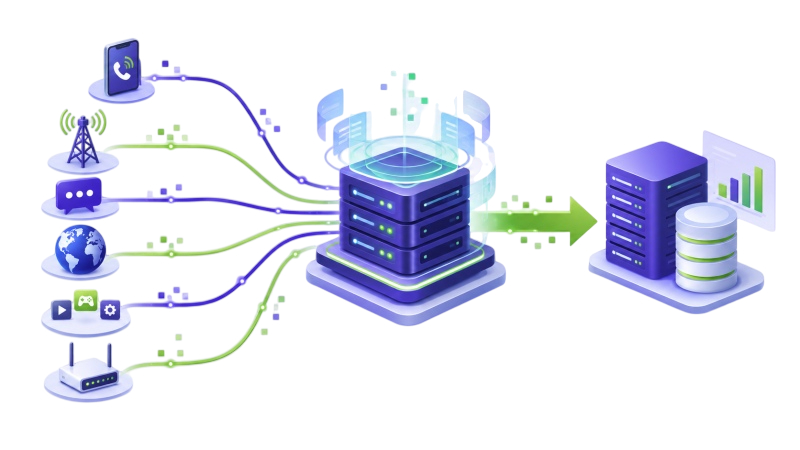
The problem is, these records come in different formats, at different times, from different systems. Some stream in real time. Others land as batch files over FTP.
If one source stops sending and nobody checks, that usage disappears silently. That is unbilled revenue.
Read Also: OSS BSS in Telecom: The Digital Backbone of Modern Communication Networks
Mediation is the cleaning stage. It converts records from every source into one standard format, removes duplicates, rejects corrupt entries and groups usage by subscriber.
Skip it, and the rating engine prices garbage. Duplicate records mean you charge customers twice. Rejected records that nobody reprocesses mean you never collect that revenue.
The first one brings complaints. The second one costs you money quietly.
Rating applies your tariff to each clean record. Per-minute rates, per-MB rates, free bundles, FUP limits, overage charges, roaming rates and promotional discounts all get matched to the subscriber's plan.
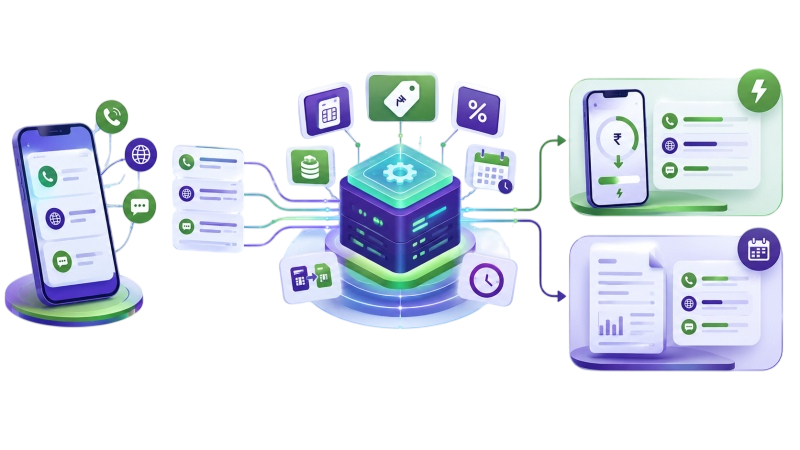
Here is why this stage causes so many disputes. Plans change constantly. A festival offer, a mid-cycle upgrade, a bundle added on day 12. If your rating rules don't pick up the change on the exact date, you bill the customer at the wrong rate. A complaint follows, and your support team loses an hour on it.
Prepaid works differently. Charging happens in real time and the balance drops as the customer uses the service. Postpaid usage is rated and held until the cycle closes.
Read Also: Innovations in OSS/BSS: Key to Rapid Telco Transformation
Rated usage lands on the subscriber's account. Then the system adds recurring fees, one-time charges like installation, adjustments, credits and any unpaid previous balance.
Taxes go in here too, including GST for Indian operators. This means tax rules must be configured correctly inside the system. A spreadsheet patch at month-end is how mismatches get into your books.
On the bill date, the system pulls every charge for the cycle and builds the invoice. A proper one shows the billing period, usage summary, itemised charges, discounts, taxes, total and due date.
Then it goes by email, SMS link, app or customer portal.
Clear itemisation matters more than most operators think. If a customer can't understand a charge, they call you. Every call costs money.
Read Also: OSS/BSS Solutions For ISP and Telecom
Billing isn't finished when the invoice leaves. Payments come in through UPI, cards, net banking, auto-debit, or cash at a franchise counter. The system must match each payment to the right invoice.
Unmatched payments pile up fast. Your accounts team then spends days chasing entries that were already paid.
For unpaid invoices, dunning takes over. Reminders by SMS and email, a grace period, then suspension. Automated dunning recovers money your team would otherwise chase by phone.
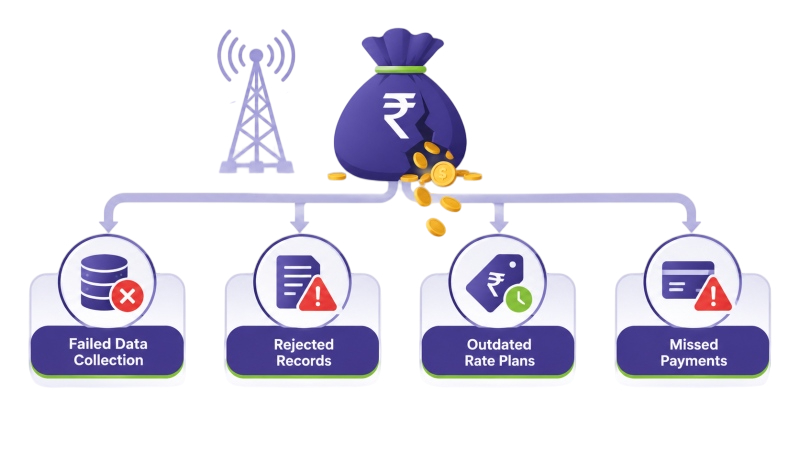
Four places show up again and again:
Each one looks small. Together they create the gap between network usage and billed usage. Most operators never measure that gap every month. They should.
To fix this, stop running billing as separate tools stitched together. When mediation sits in one system, rating in another and invoicing in a spreadsheet, every handoff is a place where records go missing.
A unified billing and BSS platform keeps the whole chain in one place. You get usage-to-revenue reconciliation, rating that updates the day a plan changes, and alerts when a data source goes quiet. Problems show up in hours instead of at month-end.
That is the thinking behind Height8's Telecom OSS/BSS platform, which brings subscriber management, rating, billing and collections into one system.
Every day of unreconciled usage is revenue you earned but never collected. If you can't put a number on last month's gap, that's the first figure to find.
If your current setup can't show it, it may be time to look at a single billing platform. Drop our team a message and we'll walk you through how H8 handles each of these stages.
Q 1. What are the main stages of the telecom billing process?
Ans. Data collection, mediation, rating and charging, account update, invoice generation and delivery, payment and reconciliation, and dunning.
Q 2. What is the difference between mediation and rating?
Ans. Mediation cleans and standardises raw usage records. Rating puts a price on them.
Q 3. How is prepaid billing different from postpaid?
Ans. Prepaid charges in real time against a balance. Postpaid rates usage during the cycle and bills at the end.
